Dartmouth AI Literacy Platform: Humanizing the LLM
Date: January 2025 - June 2025
Role: Lead Product Designer
Team: 1 Project Manager, 3 Designers, 2 Software Developers
Client: Dartmouth College (Provost's Office)
Skills: Creative Direction, User Research, Information Architecture, Content Strategy, Team Management, High-Fidelity Prototyping, User Testing
THE "TL;DR"
The Problem:
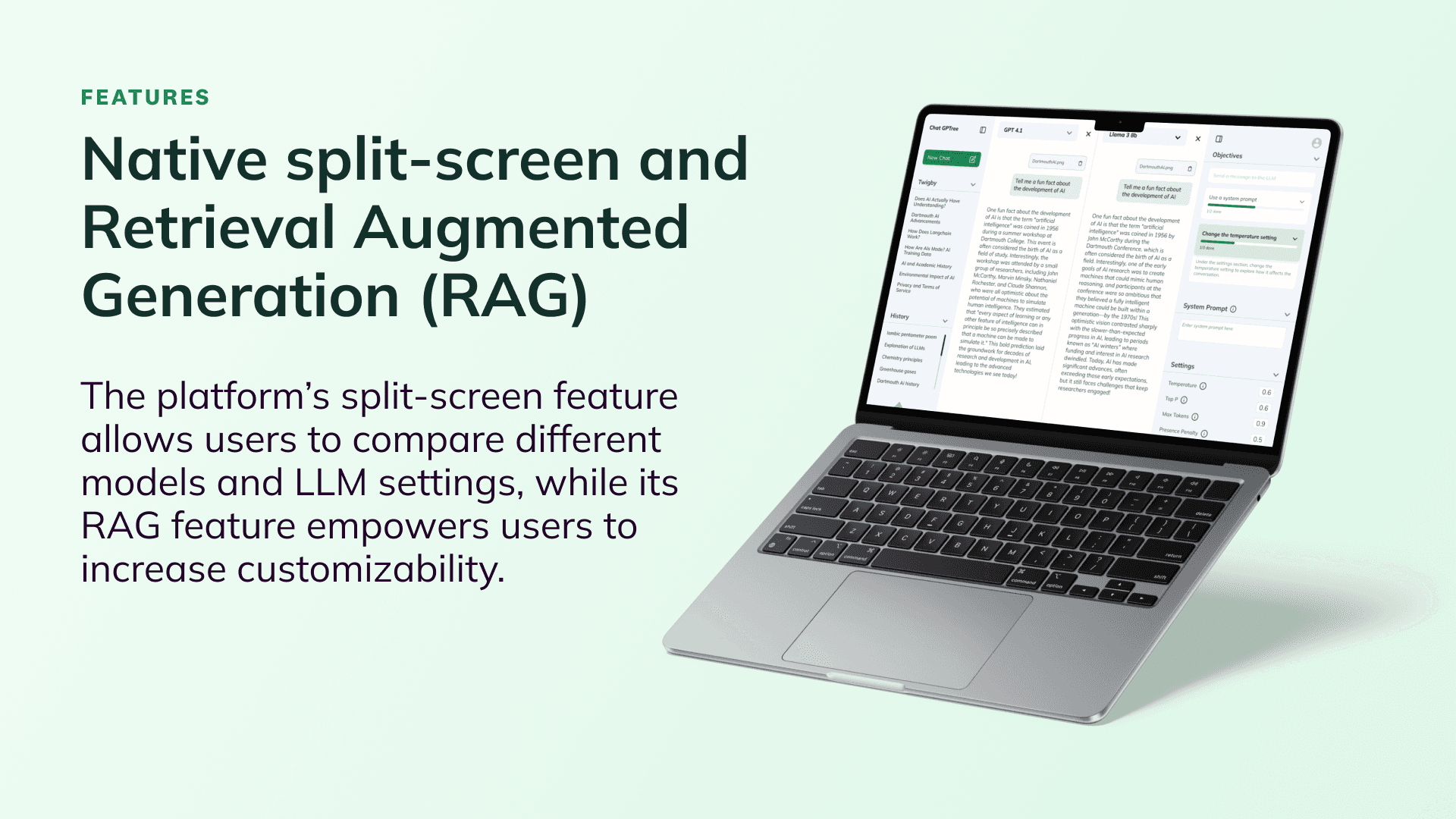
While functional, standard AI chat platforms lack the customizability and "hands-on" learning opportunities needed to promote true AI literacy among students and faculty.
The Solution:
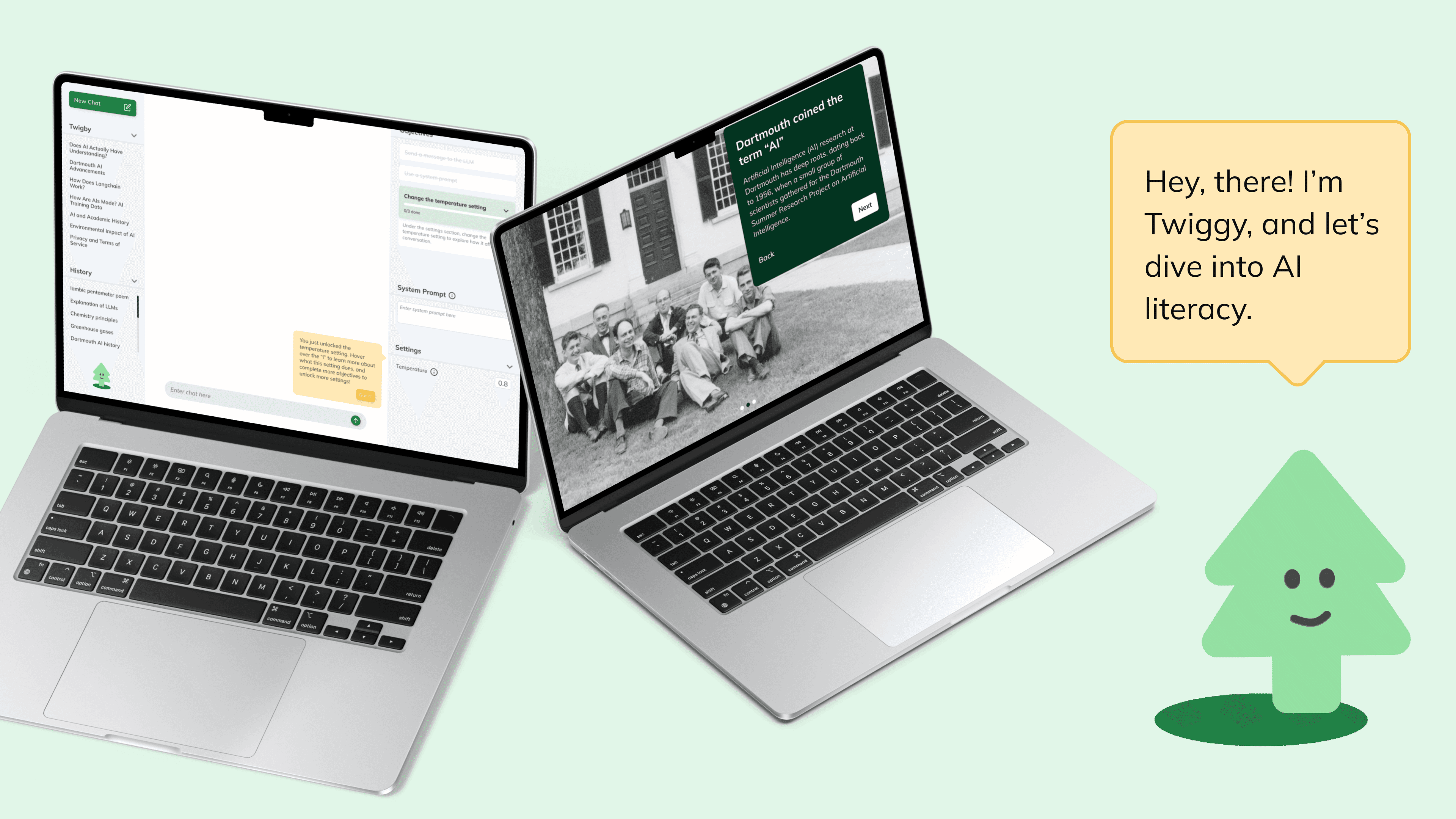
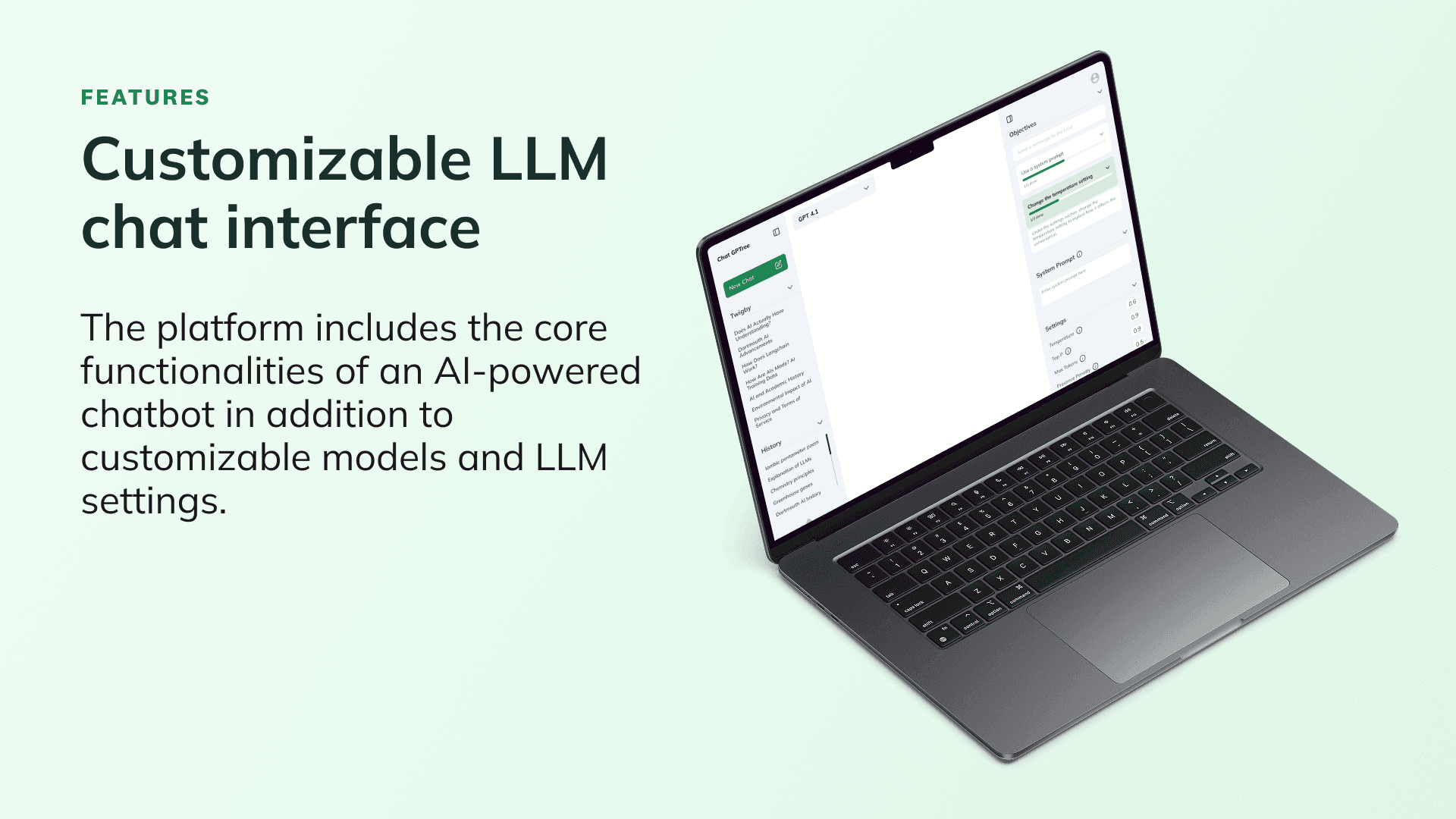
A bespoke, interactive teaching tool specifically for Dartmouth students that helps them understand how AI works before they start prompting, turning a utility tool into a pedagogical experience.
USER RESEARCH
Defining the Stakeholders:
Led the research phase by identifying primary users (first-year students) and key stakeholders (faculty, the Writing Department, and the Provost's Special Advisor on AI).
Creating the Roadmap:
Determined the project’s HCD roadmap, creating stakeholder interview guides to uncover student persepectives on and experiences with LLM tools and to understand why professors felt ill-equipped to answer student questions about LLMs.
Exploring the Status Quo:
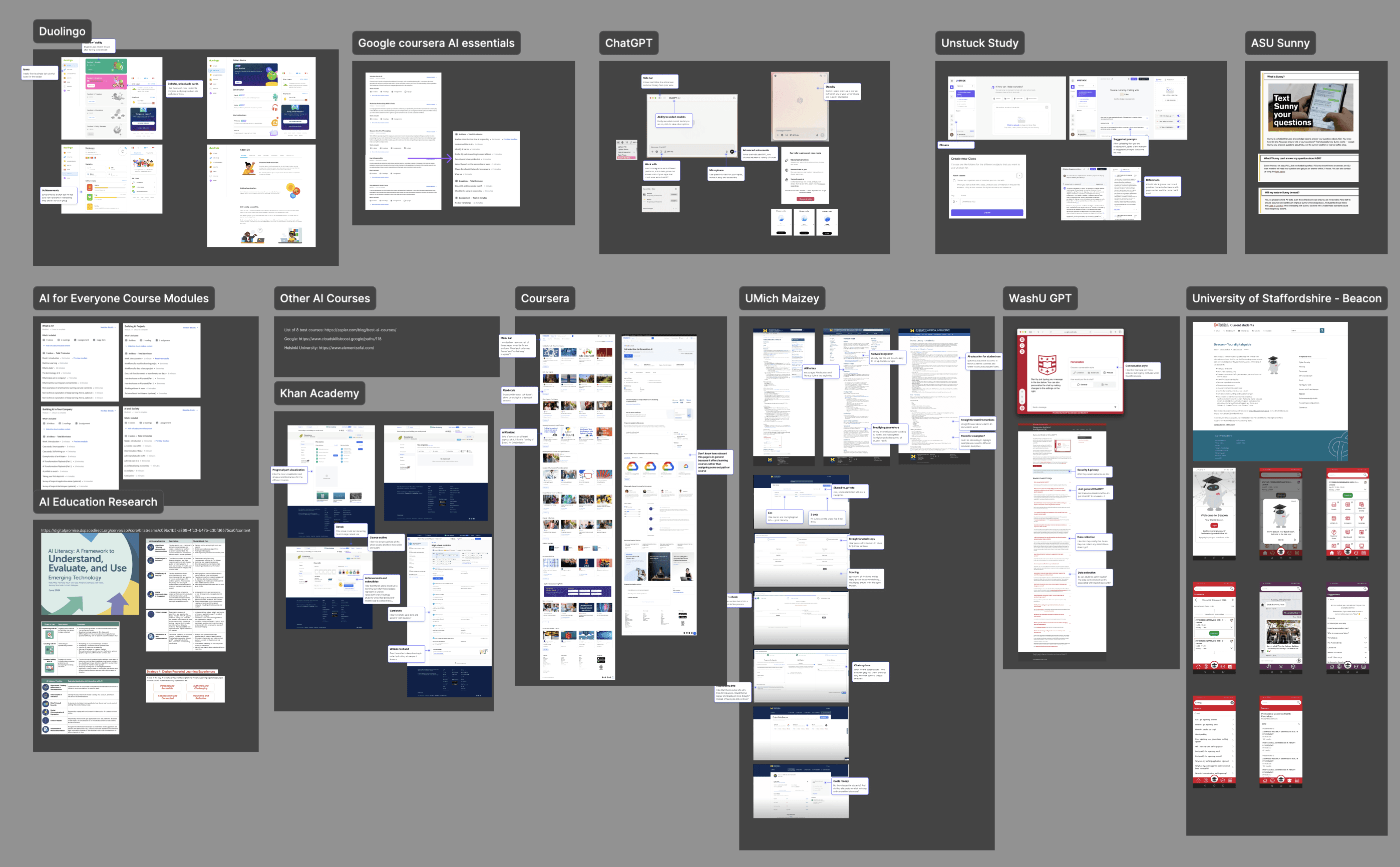
Conducted industry research on public and institution-specific LLM platforms and learning platforms.
Integrating our Findings:
Managed the delivery of research insights back to the client to ensure the product goals remained aligned with Dartmouth’s "AI heritage" and educational standards
THE PROBLEM
Initial research revealed that simply providing a Dartmouth-branded chat interface wasn't solving the core issue: a lack of fundamental literacy.
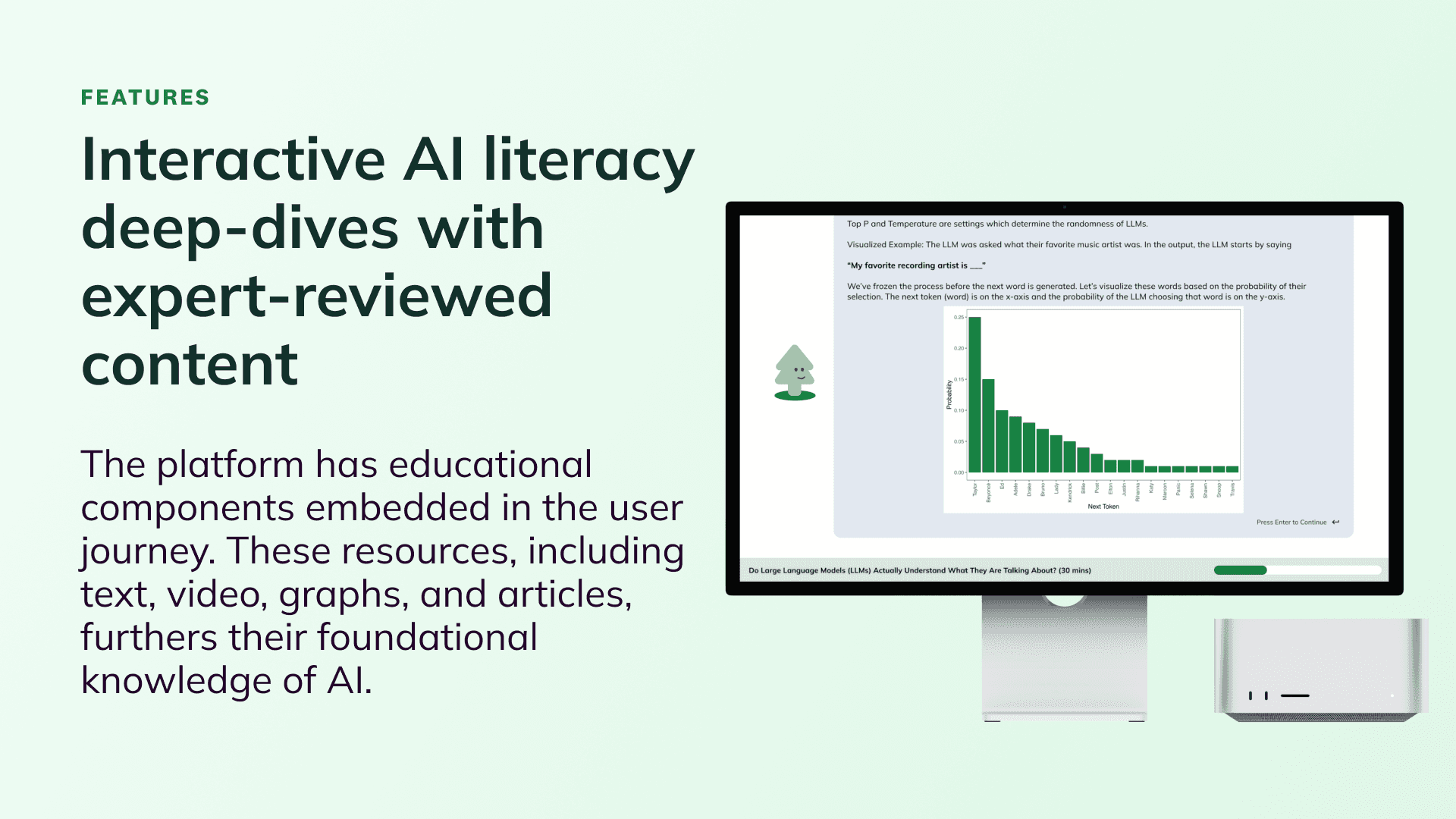
Based on direct client conversations, we pivoted from "utility" to "education." The goal became empowering users to understand AI mechanics to ensure ethical and effective use.
We committed to making the complex mechanics of LLMs more engaging and accessible for all students, regardless of their technical background.
THE DESIGN PROCESS
Leadership & Mentorship:
Acted as Creative Director, running meetings with two other designers to ensure alignment. I delegated tasks based on individual interests and learning goals to foster professional growth within the team.
Architecture & Content:
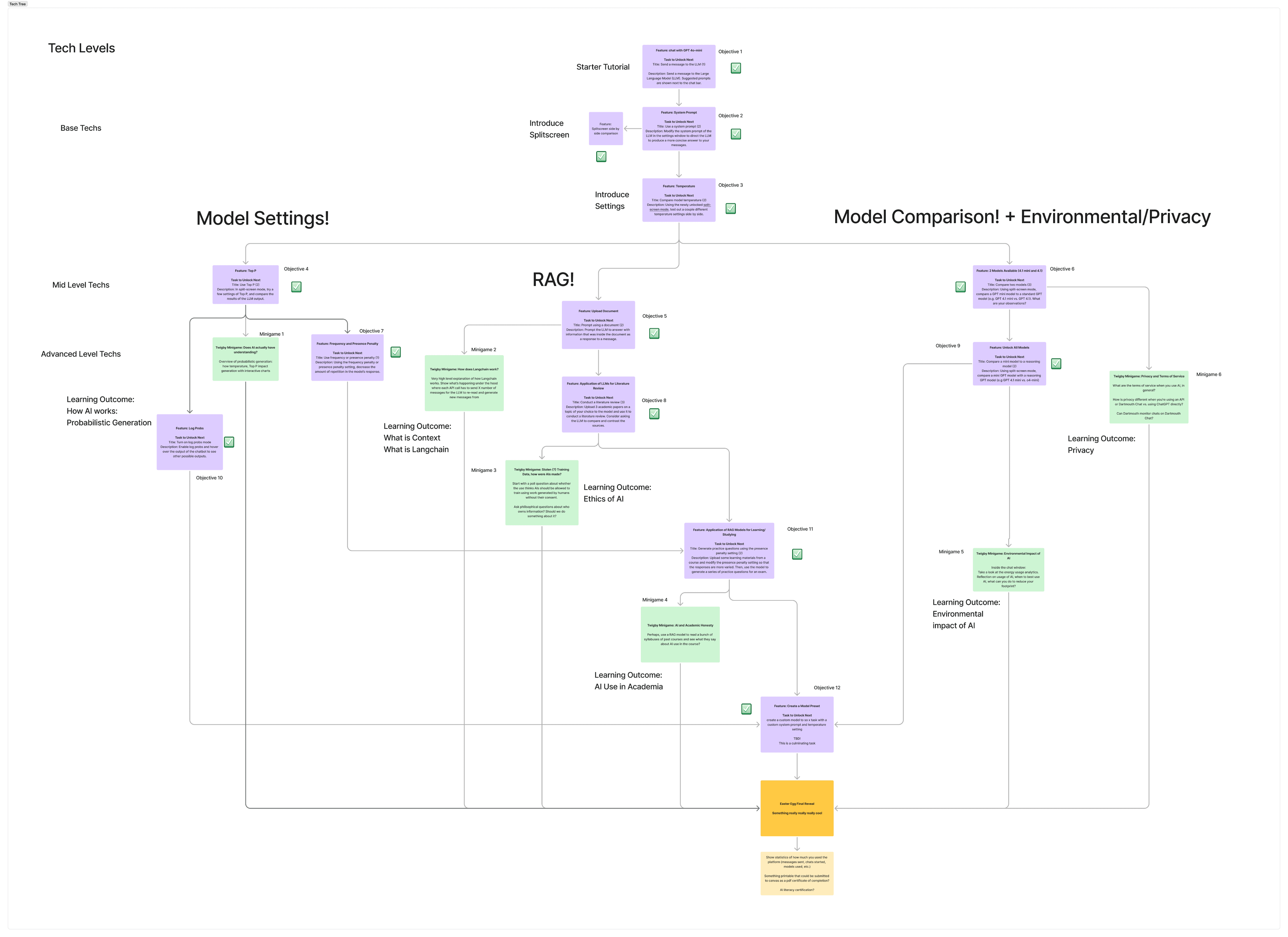
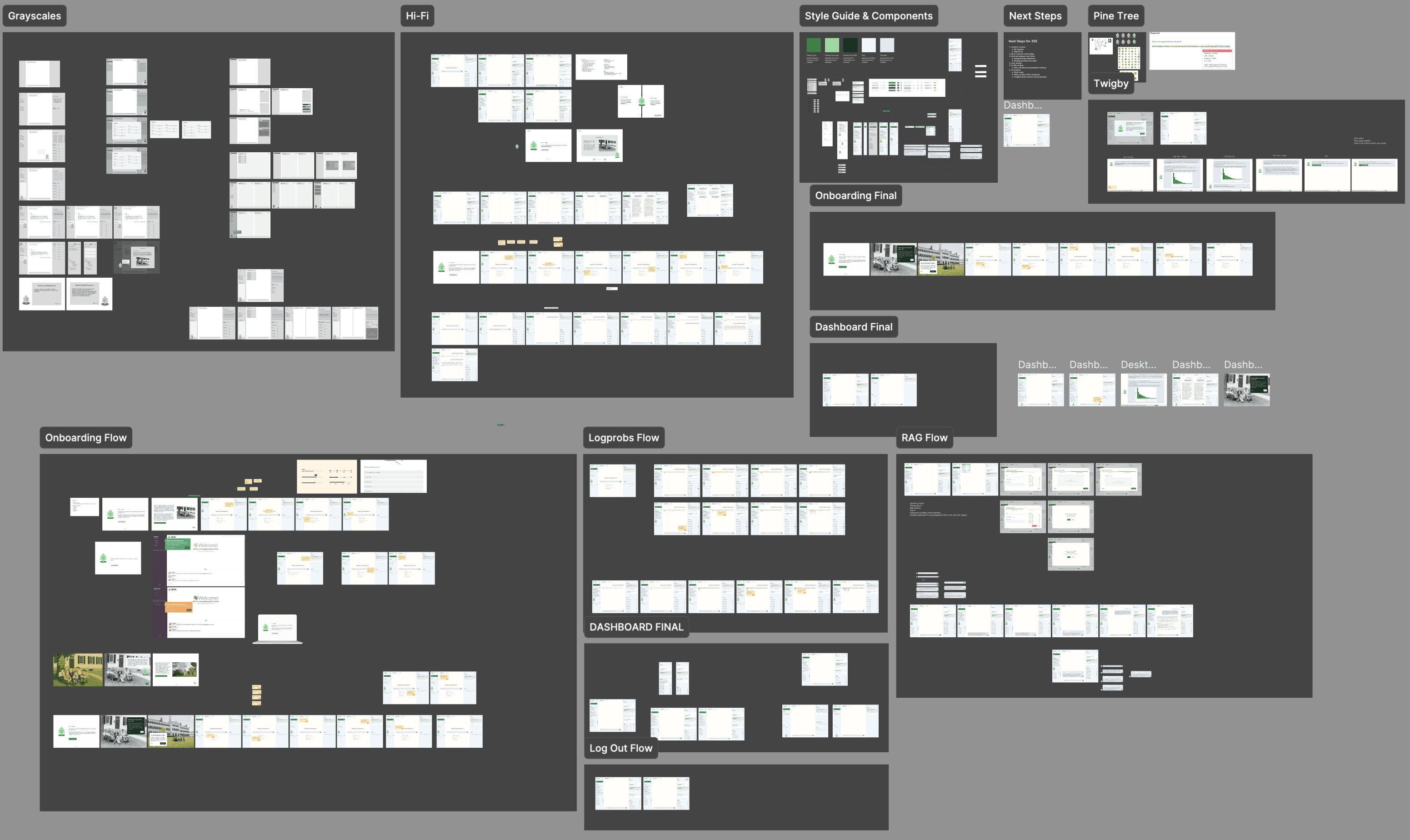
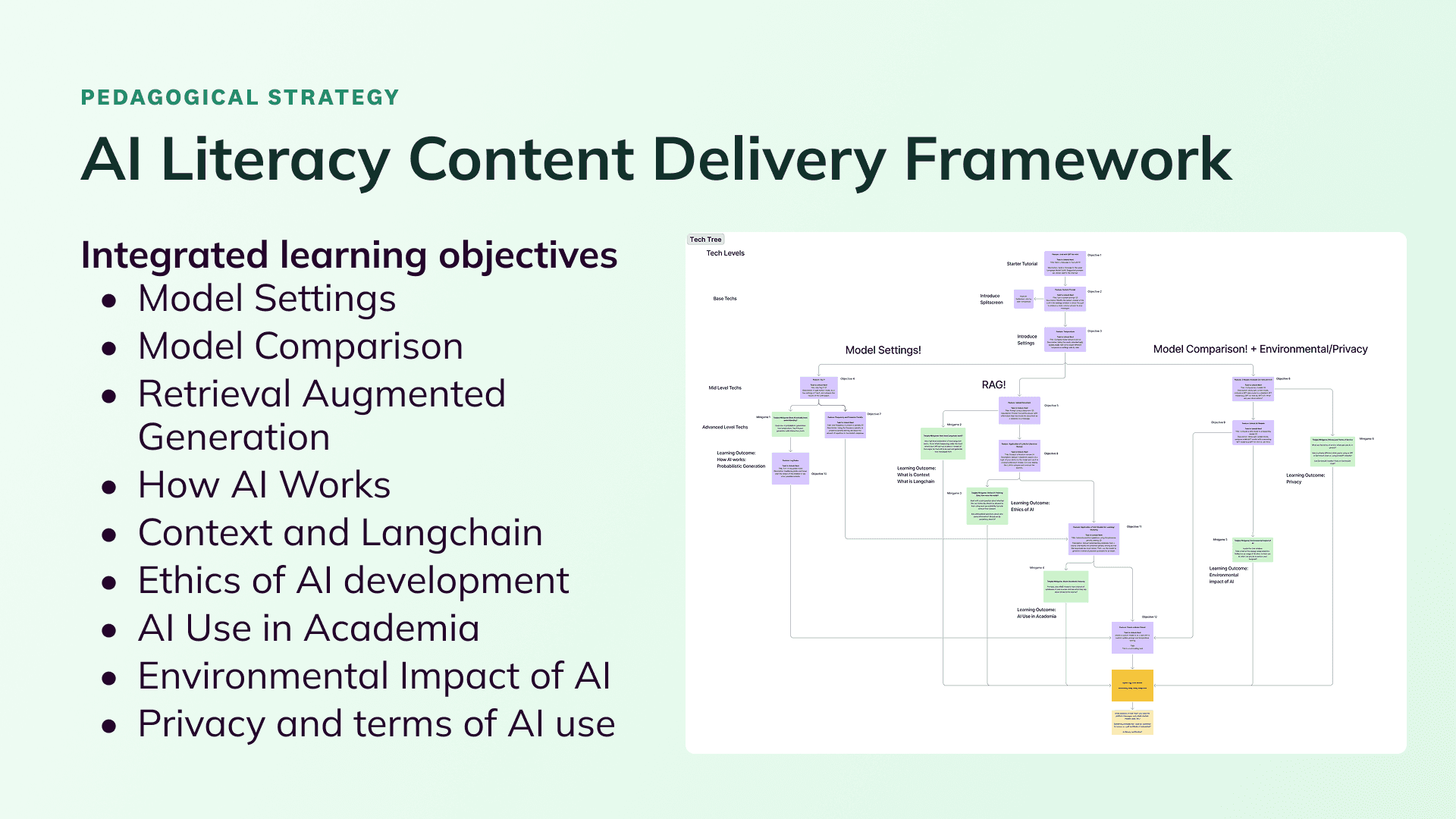
Defined the overall user flow and the hierarchical architecture of the learning modules. Designed and iterated on the UI, bringing wireframes all the way to high-fidelity prototypes.
Writing the Curriculum:
Personally authored 50% of the educational content for the modules and reviewed all others to maintain a consistent, accessible voice.
Validation:
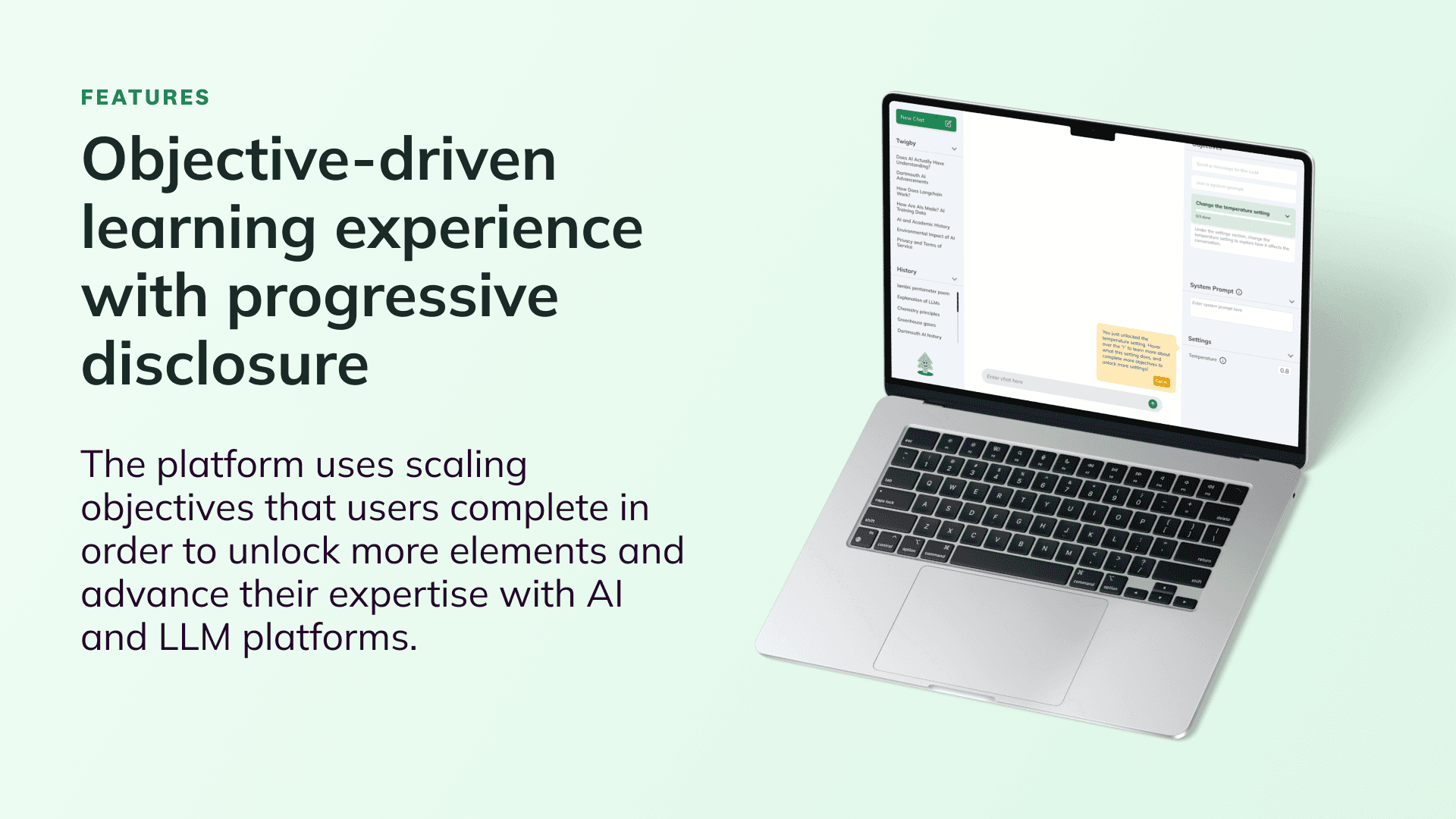
Led user testing sessions with students and faculty, using iterative feedback to refine the platform’s unique "progressive disclosure" model.
FINAL DESIGN
Progressive Disclosure
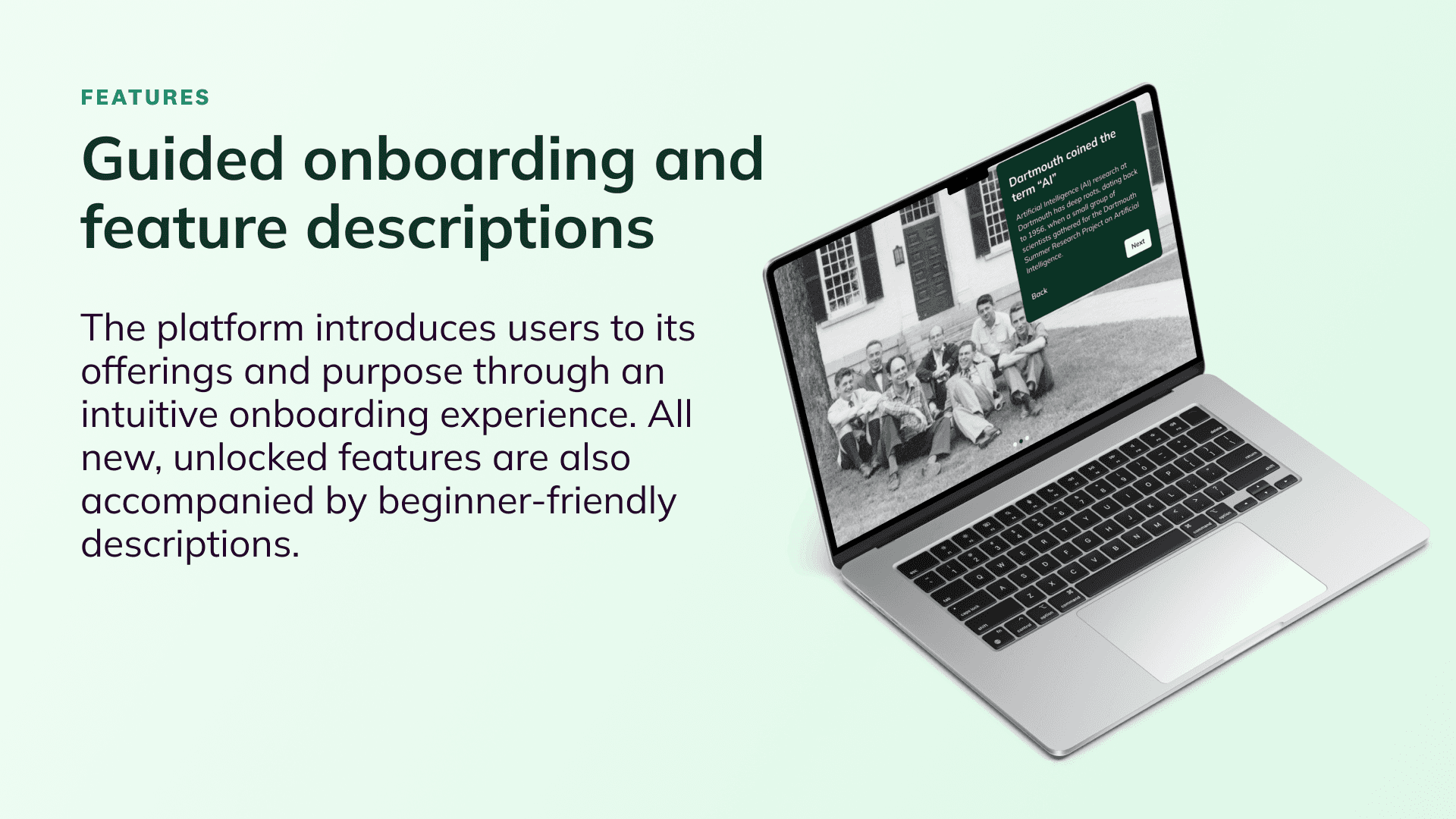
To prevent cognitive overload, features are introduced gradually through an interactive "playground" that mirrors the user's learning progress.
Twiggy, the Mascot
Introduced the platform’s mascot, Twiggy, to guide users through modules. Twiggy serves as the friendly face of the platform, lowering the barrier to entry for non-technical students.
Gamified Learning Experience
A fully prototyped and interactive product featuring gradual onboarding. Users participate in interactive learning units that gamify the experience of unlocking and learning about new LLM features.
REFLECTION & NEXT STEPS
Mentorship Takeaway:
Managing a cross-functional team over 20 weeks taught me that successful leadership involves balancing rigid timelines with the creative autonomy of my fellow designers.
Impact:
The platform was successfully prepared for its next phase: a pilot within the Dartmouth Writing Program's AI literacy segment.
Future Roadmap:
Next steps include assessing the pilot and creating an admin platform to allow professors to build their own learning units.