AisleGuide:
AI-Powered Accessible Shopping for Target
Date: October 2025 - December 2025
Role: Product Designer
Team: 4 Designers
Client: Advanced Interaction Design course at Carnegie Mellon University
Skills: AI & Robotics Research, Ethical Design, UI Prototyping, User Flow Design, User Research
THE "TL;DR"
The Opportunity:
Grocery stores are universally frequented but remain largely inaccessible for people with mobility limitations, assuming every shopper has the same physical capacity.
The Solution:
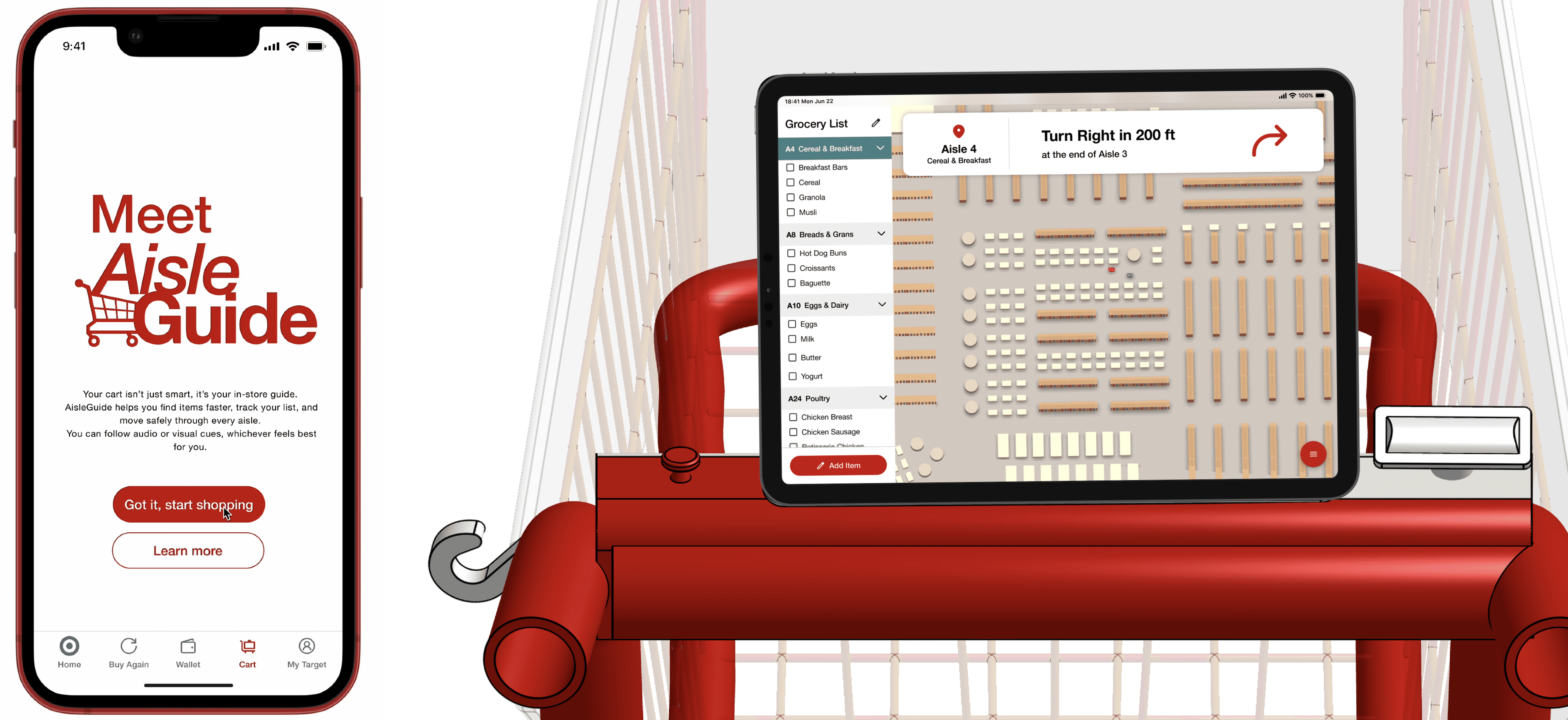
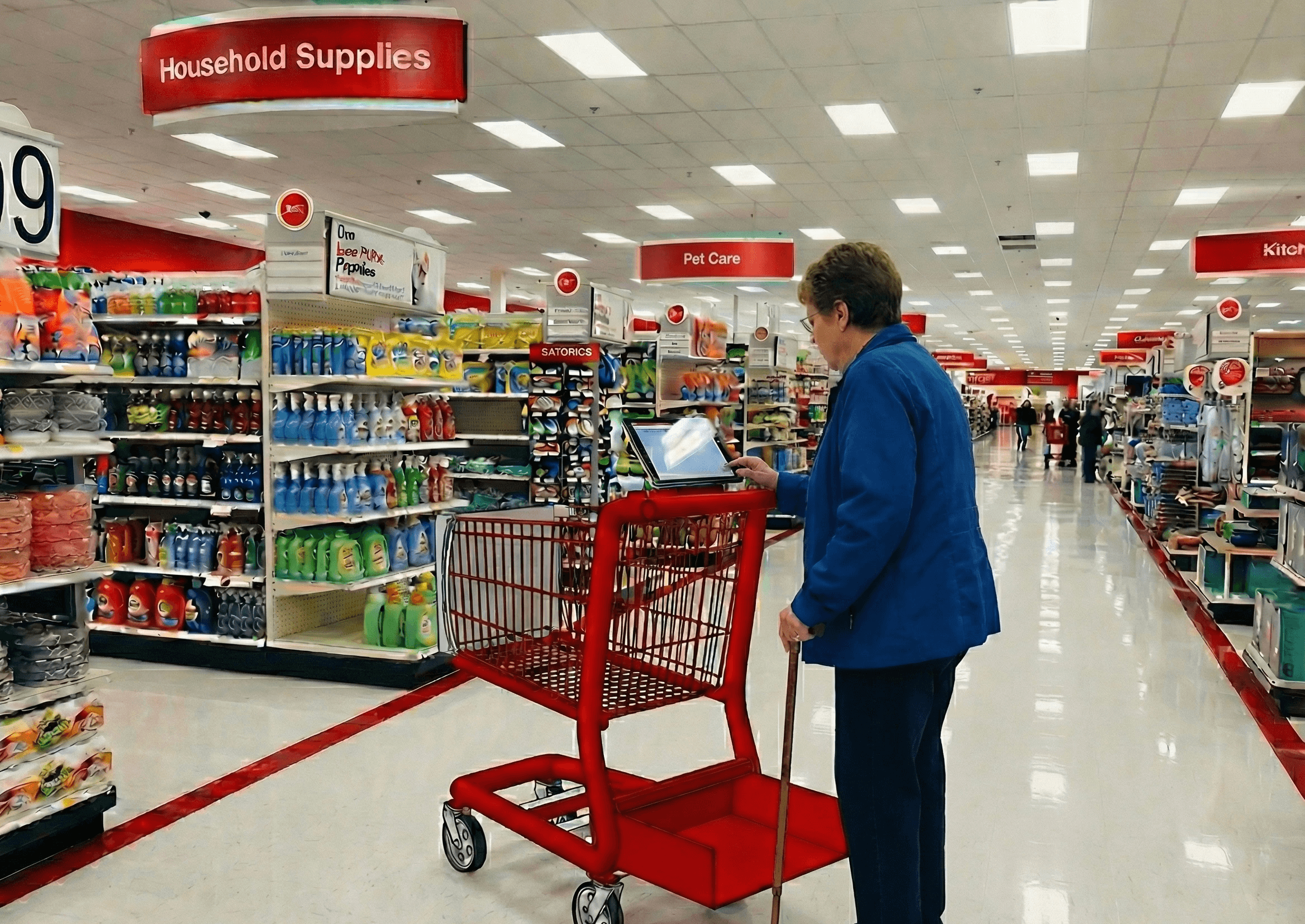
AisleGuide, an AI-powered shopping companion that simplifies navigation in large stores. It streamlines aisle navigation, reduces physical strain, and supports independent shopping through autonomous following and optimized routing.
USER RESEARCH
Primary Users:
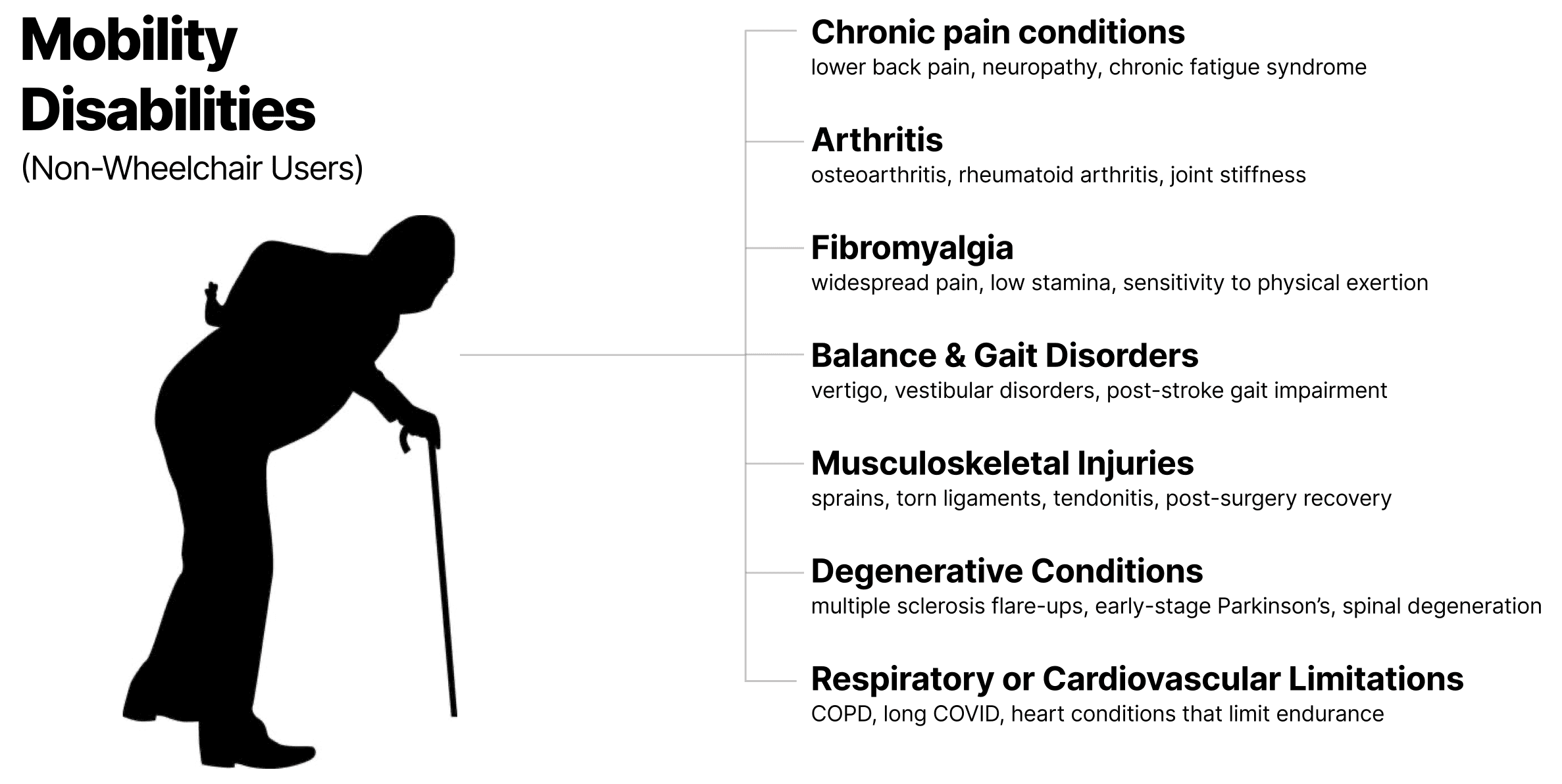
Shoppers with mobility disorders (arthritis, chronic pain, multiple sclerosis) and those with temporary injuries or respiratory conditions.
The Unaddressed Struggle:
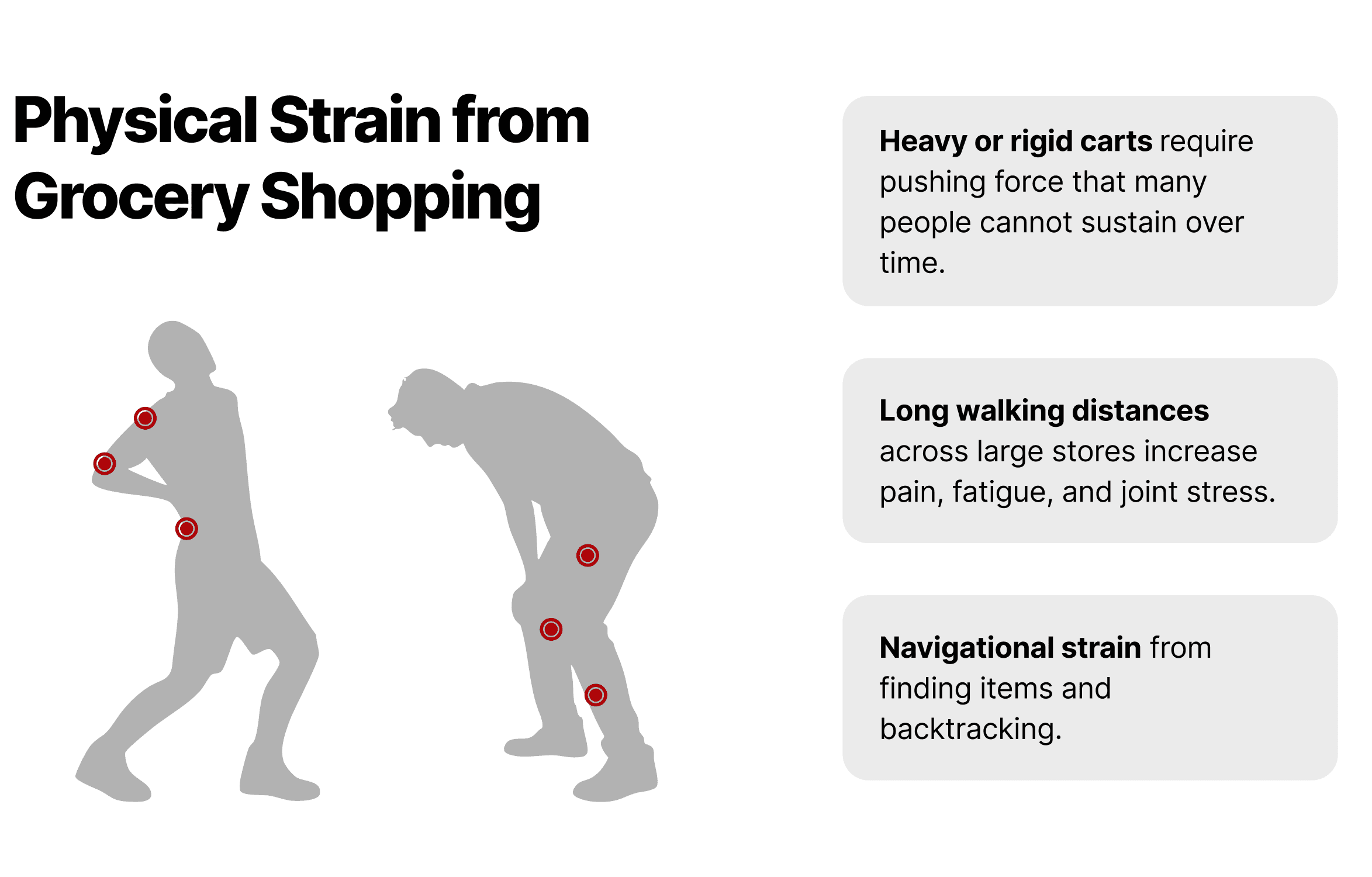
Research revealed that grocery shopping is physically demanding due to long aisles and the strain of pushing heavy carts.
Key Insight:
Current retail environments impose significant cognitive and physical "bandwidth" costs, often forcing mobility-limited shoppers to rely on others or opt for delivery services.
THE PROBLEM
Uniform Design Failure:
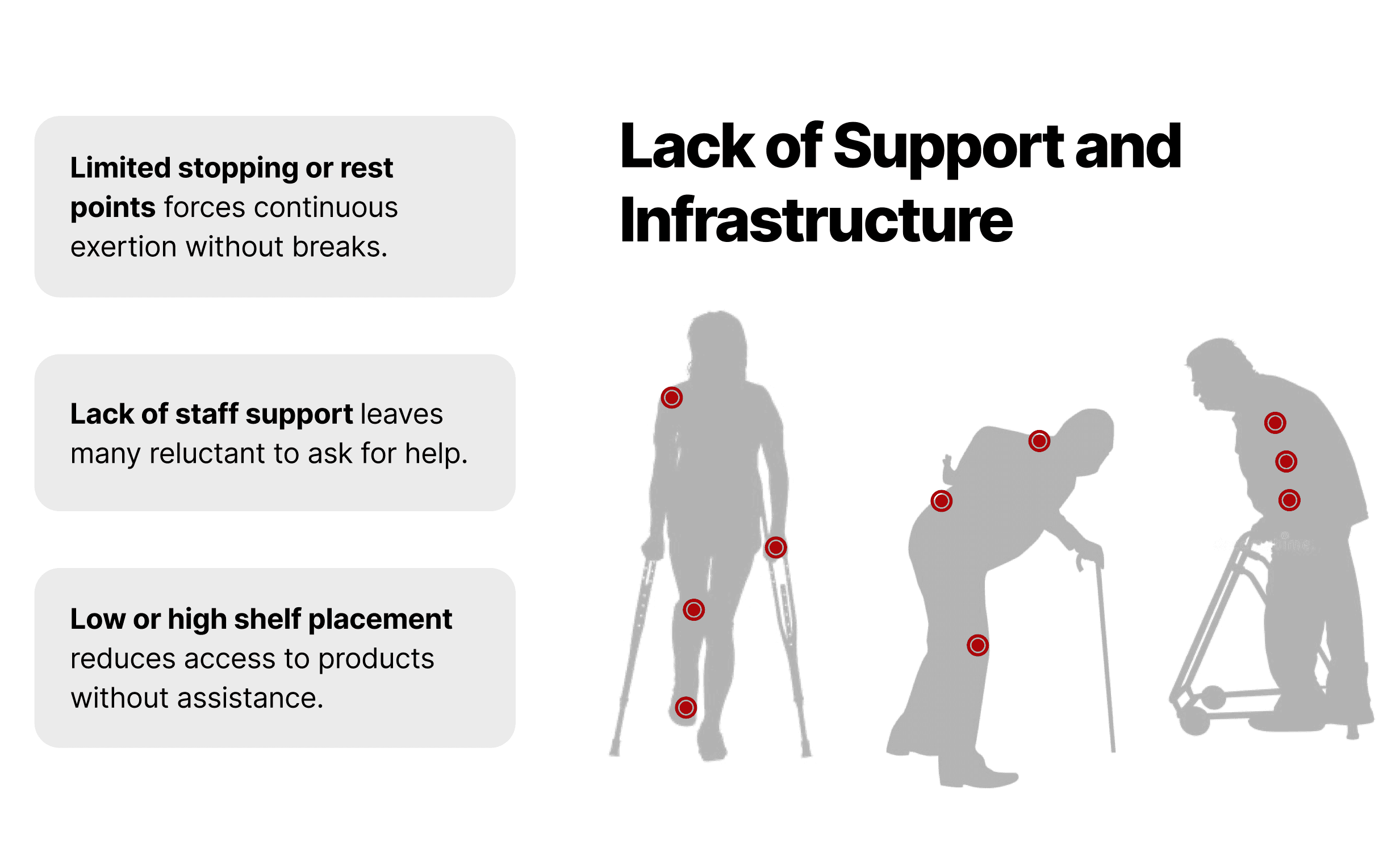
Most grocery stores are designed for a "standard" shopper, ignoring the overexertion caused by locating items and navigating crowded spaces.
Loss of Autonomy:
For many, the physical load of a standard trip makes independent shopping impossible or exhausting.

THE DESIGN PROCESS
User Flow Design:
I developed a schematic that prioritized autonomy. The journey starts with syncing a personal Target grocery list via Bluetooth, followed by the system generating an "Optimal Path" to minimize physical distance traveled.
Interface Design:
I co-designed and prototyped the cart's tablet screen, focusing on multimodal controls (voice, joystick, and manual) to ensure reliability in different store environments (e.g., noisy aisles).
Ethical Research:
I conducted an audit on the implications of AI in retail, addressing risks like automation over-reliance, privacy in data collection, and potential "noise pollution" from voice assistants.

FINAL DESIGN
Seamless Integration
AisleGuide syncs with existing Target accounts to organize shopping lists into a logical, floor-plan-aware path.
The Cart Interface
A dedicated "Call for Assistance" button and real-time path editing allow users to stay in control even if their plans change mid-trip.
Advanced Tech Stack
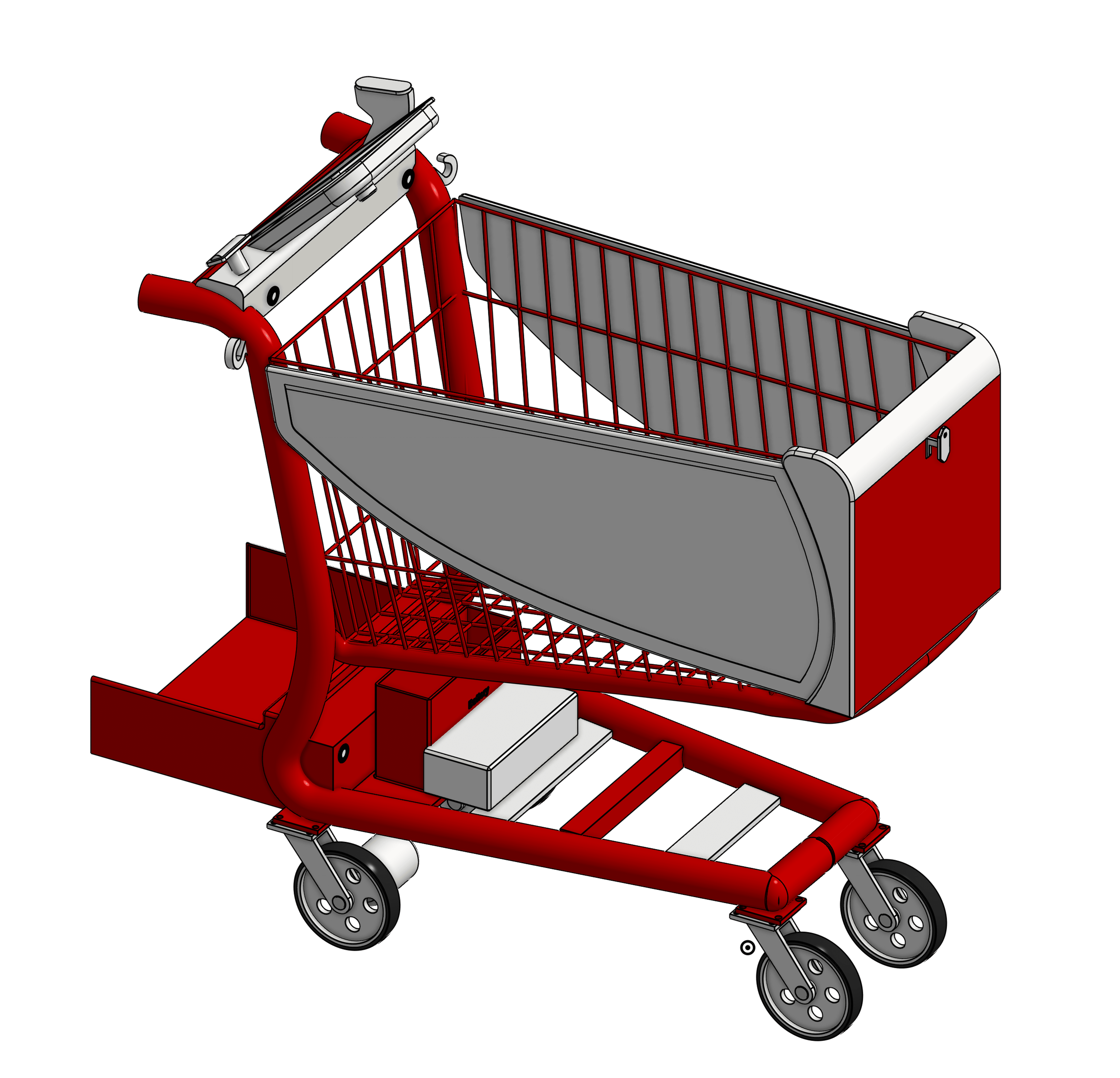
Leverages LiDAR sensors and AI navigation for safe, autonomous movement through crowded aisles, slowing down automatically for obstacles.
Post-Trip Autonomy
Once the shopper checks out, the cart is designed to self-drive back to its charging station, eliminating the need for the user to return a heavy cart.
Watch the commercial video here.
REFLECTION & NEXT STEPS
Key Learnings:
Balancing automation with human agency is critical. The system must always allow the user to take manual control (joystick/pushing) to ensure they never feel "trapped" by the technology.
Future Impact:
AisleGuide could bridge the gap between in-store shopping and digital delivery, making the physical store a welcoming place for everyone, regardless of physical ability.
Next Steps:
If I had more time, I would conduct more extensive user testing with shoppers using different types of mobility aids (crutches, walkers) to further refine the "following" speed and distance.